Heat waves grid resilience has become the most demanding stress test for the U.S. power system. Over the past decade, extreme heat has moved from a difficult weather event to a direct threat to economic stability and public health. As an analyst, I’ve watched record-breaking heat waves turn into operational emergencies: demand surges, equipment runs hotter and less efficiently, and the margin for error shrinks precisely when communities need reliable power the most.
In 2026, grid resilience is no longer an abstract concept discussed only in regulatory hearings. It is a strategic imperative. A grid built for a more stable climate era is now expected to operate under accelerating volatility—while the country simultaneously electrifies more end uses, expands data center load, and depends on electricity for critical services that cannot tolerate prolonged outages.
The uncomfortable truth is this: heat waves force the system into a “perfect storm” condition where multiple weaknesses show up at the same time. And when those weaknesses converge, operators are often left with one last tool to prevent collapse—controlled, staged outages.
Heat Waves: Why Extreme Temperatures Are a Critical Grid Risk
Heat waves are uniquely dangerous for the grid because they don’t stress just one part of the system. They put pressure on demand, supply, and the wires that connect them—simultaneously.
1) Peak demand hits historic highs
When temperatures spike, millions of air-conditioning systems switch on at once. That creates steep, synchronized load growth—often concentrated in the late afternoon and early evening. In many regions, those hours already carry the tightest reserve margins. During extreme heat, the peak can push beyond what local infrastructure was designed to handle, especially in fast-growing metro areas where demand growth has outpaced distribution upgrades.
This isn’t just about comfort. During heat events, electricity demand is tied to life safety. Cooling becomes health infrastructure. That raises the stakes when operators face scarcity.
2) Equipment loses efficiency exactly when it’s needed most
High temperatures reduce the operational efficiency of critical equipment:
- thermal power plants can experience derates
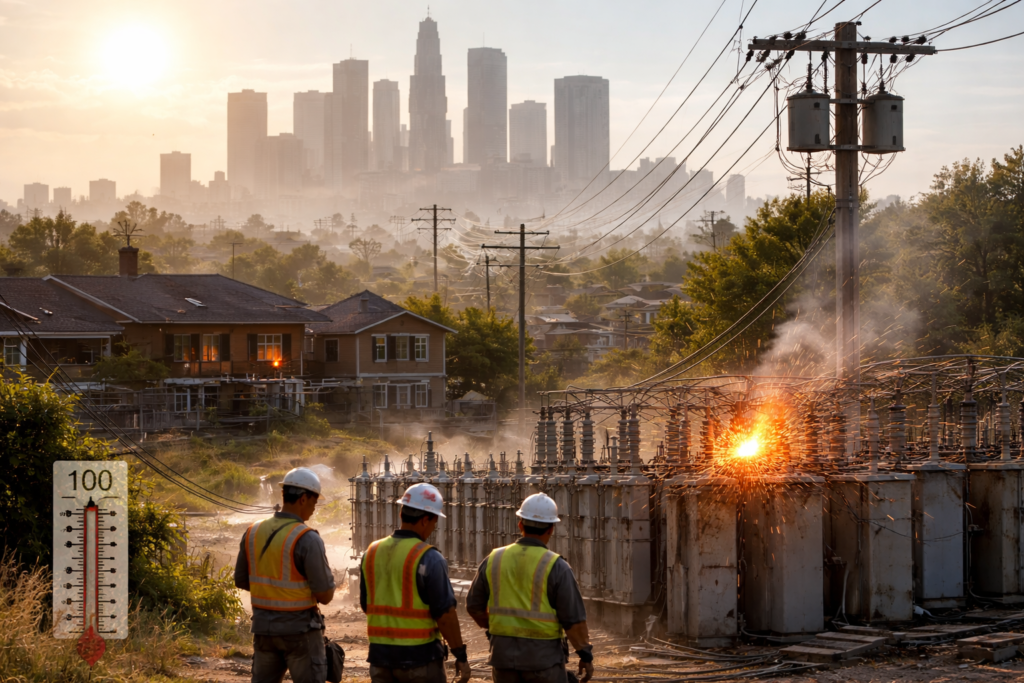
- transformers and substations run hotter, reducing safe operating limits
- inverter and power electronics performance can be constrained by heat
- maintenance and repair work becomes harder and slower under extreme conditions
In plain terms: heat increases demand while reducing effective supply and stressing the delivery equipment.
3) Transmission lines physically carry less power in heat
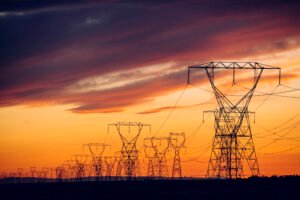
Heat doesn’t just “stress” the grid conceptually. It changes physics. Transmission lines warm and sag, and sagging reduces safe transfer capability. That can limit the ability to move power between regions right when it would be most valuable.
So even when generation exists somewhere in the broader system, the grid may not be able to deliver it to the areas under the most pressure. Congestion rises, flexibility falls, and operators lose options.
When the system reaches the edge
In my work, I see how these factors combine into a single operational reality: operators must preserve frequency and stability under extreme conditions. When reserves tighten and transfer capability is constrained, the only way to prevent a broader collapse can be controlled load shedding—rotating or staged outages designed to keep the system intact.
This is why heat waves have become a defining reliability challenge. They compress the system’s margin from multiple directions at once.
Resilience is not the same as routine reliability
One of the most important shifts in 2026 is that resilience has moved beyond “everyday reliability.” Routine reliability is about maintenance, outage reduction, and restoration times. Resilience is broader: it’s the ability to withstand extremes, adapt under stress, and recover quickly—without repeating the same failure patterns each summer.
That shift changes how utilities prioritize capital. It also changes how regulators evaluate investment: not only “did you keep SAIDI and SAIFI down?” but “did you build a system that can survive a climate-normal year where extremes are expected?”
In 2026, resilience planning is increasingly built around three pillars.
Pillar 1: Heat-hardened infrastructure
The first pillar is straightforward: infrastructure must be designed to operate in hotter conditions than historical averages. That includes:
- next-generation transformers with higher thermal tolerance
- advanced conductors designed for higher operating temperatures
- substation upgrades that improve cooling, monitoring, and protection
- equipment replacement programs focused on the most heat-exposed and failure-prone assets
- operational standards that assume more frequent heat emergencies
This is not glamorous work, but it is foundational. A system cannot become resilient if its core hardware is already operating too close to limits during normal summer peaks.
A key theme I see in 2026 planning is selective prioritization: utilities focus first on the corridors and substations that repeatedly become “hot spots” under summer load—because that’s where failures are most likely to cascade.
Pillar 2: Smart grids and real-time load control
The second pillar is intelligence: using sensors, automation, and analytics to operate the grid more dynamically under stress. In 2026, smart grid investments are increasingly aimed at one primary goal—buying time and flexibility during peak conditions.
That includes:
- sensors that detect overheating and abnormal conditions early
- automated switching to isolate localized problems before they spread
- real-time visibility into feeder-level loading
- demand response programs that can reduce peak load quickly
- advanced forecasting tools (including AI-assisted models) to anticipate where constraints will appear hours before they become emergencies
The operational advantage is significant. If you can identify a transformer bank approaching thermal limits before it trips, you can reduce load, re-route flows, or dispatch local resources to stabilize the area. That is the difference between a controlled response and an uncontrolled outage.
In practice, the most valuable “smart grid” outcome during heat waves is precision: reducing the need for wide-area load shedding by targeting interventions where they matter most.
Pillar 3: Decentralization and storage as local buffers
The third pillar is decentralization—using local generation and storage to reduce pressure on the centralized system during critical hours.
In heat waves, the most valuable period is typically the late afternoon peak. This is where battery storage and distributed energy resources can act as local buffers:
- grid-scale batteries can shave the peak and provide fast response
- community batteries and microgrids can support critical loads
- behind-the-meter storage (where present) can reduce feeder stress
- flexible loads (smart thermostats, managed EV charging) can shift demand away from the tightest hours
This is not about “going off-grid.” It’s about reducing peak stress so the centralized system has enough margin to stay stable.
From my analysis, the most resilient regions in 2026 are the ones that treat storage and decentralization as operational tools—not side projects.
The role of solar: a strategic advantage during heat peaks
Solar has a unique advantage during heat waves: in many regions, its production peak aligns closely with the highest cooling demand. That timing makes solar not just a decarbonization resource, but a resilience resource—especially when paired with storage.
In 2026, the question is not whether the U.S. needs clean energy. The question is how to integrate it so it stabilizes the grid on the hardest days of the year.
That means focusing on:
- siting solar where it relieves local constraints
- pairing solar with batteries to extend support into evening peaks
- improving interconnection processes so projects can come online faster
- ensuring visibility and controllability so operators can rely on these resources during emergencies
Solar’s value is highest when it reduces peak stress at the feeder and substation level—not only when it adds megawatt-hours on a regional balance sheet.
Why heat resilience is also a public health and economic story
Heat waves are not just a grid problem. They are a public health problem. Prolonged outages in extreme heat can become life-threatening, especially for:
- older adults and medically vulnerable residents
- low-income households without backup options
- communities facing urban heat island effects
- areas where smoke or poor air quality makes indoor cooling essential
Economically, heat-related grid stress hits businesses through downtime, spoiled inventory, reduced productivity, and increased operating costs. It also shapes investment decisions: regions with repeated summer reliability issues become less attractive for expansion, particularly for energy-sensitive industries.
This is why resilience is increasingly discussed as an investment in stability. The cost of hardening and modernization may look high on a utility balance sheet—but the cost of repeated emergency events is often higher when you account for the broader economic and human impacts.
What a “heat-ready” grid looks like in 2026
When I look across utility strategies and operational priorities, a heat-ready grid in 2026 tends to have several identifiable characteristics:
- stronger thermal tolerance in critical substations and transformers
- better feeder-level monitoring and automated switching
- demand response programs that can produce measurable peak reduction
- storage strategically placed where it can prevent local overloads
- clear emergency operating protocols and public communication plans
- planning based on extreme conditions, not historical averages
The key is not one technology. It is the integration of infrastructure, operations, and local flexibility—so the system can absorb shocks without cascading failures.
My conclusion: design for extremes, not averages
The era of historical averages is over. The grid of the future must be designed around tomorrow’s extremes. In 2026, heat waves grid resilience is not a theoretical concept—it’s a survival requirement for the modern U.S. economy and for public health.
At US Energy Watch, we view resilience as an investment that pays back repeatedly through saved lives, reduced disruption, and greater economic predictability. The energy system must be as flexible as the weather is unpredictable. And the regions that modernize for heat resilience—through hardened infrastructure, smart operations, and local storage buffers—will be the regions best positioned to thrive in the decade ahead.
Related Reading
- Winter Storms and Grid Resilience: The Other Extreme Weather Threat
- Grid Resilience in Extreme Weather: What US Utilities Are Doing in 2026