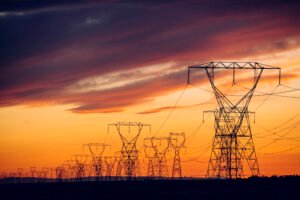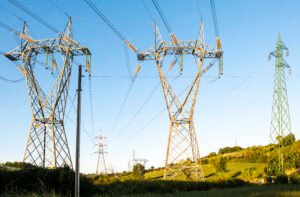

Aging US power grid infrastructure is the real constraint on America’s energy future in 2026—and it’s now the limiting factor for delivering electricity, not generating it. The United States has reached a critical point in its energy evolution. From my perspective as an analyst in this sector, the central challenge is no longer whether we can build enough megawatts. The challenge is whether we can move power to the places that need it, at the speed the modern economy demands, while keeping the system reliable and rates defensible.
We are watching an older network attempt to absorb three forces at once: the rapid rise of AI and data-center load, the steady climb of electrification across transportation and buildings, and a climate reality that is testing infrastructure with more extreme heat, storms, and wildfire conditions. A grid designed for last century’s assumptions is being pushed to perform like a next-generation platform—without the timelines, permitting pathways, and supply chains that would normally accompany that kind of upgrade.
In short: the infrastructure deficit has become a national economic constraint. And in 2026, it is increasingly visible not only in reliability debates, but in investment decisions—where companies choose to build, how fast utilities can connect new load, and how regulators allocate the costs of expansion.
The US Power Grid: Built for a Different World
A large portion of America’s transmission and distribution backbone was designed and built during an era defined by centralized generation and predictable, one-way consumption. The logic was straightforward: big power plants fed high-voltage lines, those lines delivered into substations, and distribution networks served customers whose role was mostly passive.
That world is gone.
My analysis of today’s grid requirements points to three structural changes that the system was never designed to handle at scale:
1) Demand is no longer linear—and it arrives in clusters
The most disruptive growth is not always gradual. AI data centers can add large blocks of load in short timeframes, and they tend to cluster where fiber, land, tax policy, and proximity to major markets align. EV charging adds another layer: it can be diffuse (residential) or sharply concentrated (fleet depots and highway fast charging). Electrification of heating and industrial processes will only deepen this curve in the years ahead.
What matters is not simply “more demand.” It’s where demand appears and how quickly it scales relative to grid build timelines.
2) Power flows are becoming two-way on distribution networks
Distributed energy resources—rooftop solar, community solar, behind-the-meter storage, smart inverters, and demand-response programs—are changing how distribution systems behave. This is a positive evolution, but it isn’t plug-and-play. A distribution network built for one-way delivery must be upgraded for monitoring, protection, voltage regulation, and operational control when customers become producers and storage becomes widespread.
3) Resilience is no longer optional—it’s operational reality
Grid resilience used to be treated as a planning layer. In many regions, it is now an operating condition. Heat waves stress transformers and drive peaks. Severe storms damage lines and substations. Wildfire risk forces utilities to harden equipment, rethink rights-of-way management, and in some cases change operating protocols to reduce ignition risk. This is not an abstract climate discussion—it is a reliability and cost discussion that shows up in budgets, outage response, and capital plans.
These shifts expose a hard truth: the physical components—transformers, substations, and high-voltage lines—do not evolve at the speed of the industries and technologies that rely on them. Even when capital is available, the calendar is constrained by siting, permitting, construction, and supply chains.
Transmission: the “narrow throat” of the system
In 2026, if you want to understand why the aging US power grid is limiting growth, start with transmission. The U.S. can add generation capacity, and many markets are seeing a robust pipeline of new projects. But moving electricity from where it’s produced to where it’s needed—reliably, at scale, and with redundancy—has become the defining constraint.
This is what I see as the main set of barriers:
Overloaded corridors and congestion
The best renewable resources are often located far from major population centers. Without sufficient transfer capability, low-cost energy gets trapped behind constrained lines. That means higher congestion costs, limited flexibility during peak events, and less real-world benefit from new generation sitting on the wrong side of constraints.
Administrative and permitting delays
Transmission projects are not like adding a few turbines to an existing plant. They cross jurisdictions, land types, and regulatory bodies. Environmental review, routing disputes, and permitting procedures can stretch timelines dramatically. When those timelines collide with fast-moving load growth, the grid becomes the limiting factor—even if generation is available.
Local opposition and routing realities
Even when a new transmission line is clearly beneficial at the regional level, local resistance can stall or reshape projects. That resistance may be driven by land use concerns, environmental impacts, property values, or simple “not in my backyard” dynamics. The result is that the national interest often loses to fragmented authority, even when the economics are clear.
The net effect is simple: transmission is the narrow throat through which the energy transition and the AI economy must pass. And right now, that throat is too tight.
The interconnection queue crisis: when projects can’t get on the grid
One of the most visible symptoms of systemic overload is the interconnection queue backlog—projects waiting for studies, approvals, and upgrades required to connect. In 2026, there are many generation and storage projects that are viable on paper, financed, and ready to move—yet stuck in a procedural bottleneck.
This creates two major consequences:
- It slows supply growth even when the market wants it.
If new capacity can’t connect, the system remains tighter than it needs to be. That makes reliability margins thinner and prices more volatile in constrained periods. - It raises costs indirectly for businesses and households.
Delays can reduce competition, keep older assets online longer than planned, and increase the cost of meeting peak demand. Even when ratepayers don’t see “interconnection backlog” as a line item, they can feel its effect through higher system costs and slower modernization.
Interconnection reform is necessary, but it is not sufficient. You can streamline the queue process, but if the underlying grid lacks capacity, the queue simply reveals the same reality faster.
Grid hardening and modernization: from reactive repairs to proactive resilience
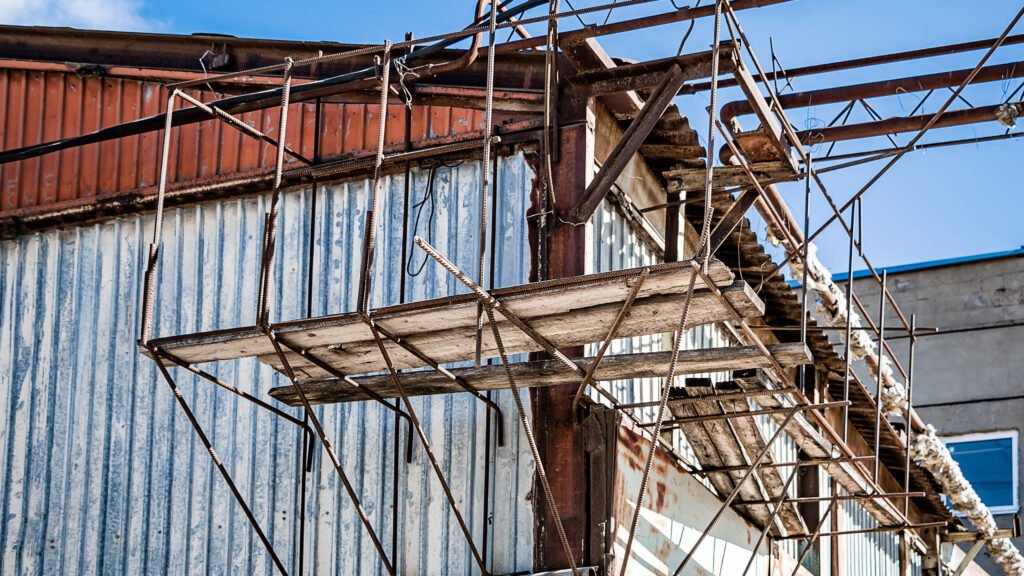
Utilities are increasingly shifting from reactive repairs to proactive hardening—especially in regions where wildfire risk, storms, and heat stress are now recurring conditions.
In broad terms, modernization in 2026 tends to fall into two categories:
1) Physical hardening
This includes stronger poles and structures, upgraded conductors, substation protections, and—in the highest-risk corridors—selective undergrounding. Utilities are also investing in vegetation management, fire-resistant materials, and design changes that reduce ignition risk. These are expensive projects, but they are increasingly treated as baseline resilience rather than optional improvements.
2) Digitalization and automation
Modern grid operations require visibility. Sensors, automated reclosers, sectionalizers, and advanced distribution management systems help operators detect faults faster, isolate issues more precisely, and restore service more quickly. Over time, these systems also support more efficient integration of distributed energy resources and demand-response programs.
This kind of investment rarely generates headlines. But it is the unglamorous work that keeps the lights on while the economy changes.
The investment question: who pays—and who benefits?
Modernizing the aging US power grid requires massive capital. That leads to the central policy debate that will define 2026 and beyond: how should these costs be allocated?
Traditionally, grid investments are recovered through rates spread across broad customer classes. But the 2026 demand environment complicates that model. Large-load growth—especially corporate-scale load—can trigger major upgrades in specific areas. And once that happens, the public will ask a direct question:
Is it fair for households to subsidize grid expansion that primarily enables concentrated corporate growth?
This is not a simple argument with a single correct answer. A stronger grid benefits everyone. Economic development creates jobs and tax base. Reliability improvements protect public safety. But cost allocation must also preserve legitimacy. If families feel they are paying first while the largest beneficiaries pay last, backlash becomes likely—and that backlash can slow the very investment the system needs.
In my view, the most competitive regions in the next decade will be the ones that create:
- transparent planning,
- predictable rules,
- and fair cost-sharing frameworks that align investment responsibility with the drivers of new load.
Why infrastructure is now an economic and national security issue
In 2026, grid infrastructure is no longer a niche engineering topic. It is a constraint on economic growth and a pillar of resilience. Regions that modernize faster will have a strategic advantage in attracting investment, connecting new industries, and maintaining reliability through climate-driven stress events.
This is especially true in the context of AI and electrification. Data center development does not wait for decade-long transmission timelines. Industrial reshoring decisions are made on operational certainty. Communities care about affordability and reliability. And the national economy depends on all of it functioning without cascading failure.
The grid, in other words, is not a supporting character anymore. It is the plot.
My conclusion: the grid is the backbone of America’s next decade
The United States is capable of building the energy future it wants—but only if it treats grid infrastructure as a national priority rather than a slow-moving afterthought. In 2026, the core limitation is not imagination, and it is not even generation in most markets. The limitation is the physical delivery system: transmission, distribution, substations, and the permitting pathways that govern them.
Aging US power grid modernization is now one of the most important economic projects in the country. The regions that move quickly—while balancing fairness, reliability, and community impact—will win investment and improve resilience. The regions that don’t will face higher congestion, slower growth, and sharper reliability risks.
At US Energy Watch, we believe the future of American energy depends on bold policy decisions and sustained investment in the backbone of the system—the electric grid that makes everything else possible. The next era of U.S. leadership won’t be determined only by how much electricity we can generate. It will be determined by whether we can deliver it—reliably, affordably, and at the speed the modern economy demands.
Related Reading
- Transmission Permitting: The Regulatory Barrier Slowing Grid Modernization
- How Energy Deals Are Reshaping the US Power Grid in 2026