
Transmission permitting in the United States has become one of the most significant obstacles to building the modern energy system required in 2026. While technological innovation in renewable energy, battery storage, and grid software continues to accelerate, the infrastructure needed to deliver electricity across the country is stuck in a much slower process — one defined by regulatory approvals, local opposition, and complex jurisdictional rules.
The irony is striking. The United States has the technology, the capital, and the engineering expertise to expand its power system rapidly. Yet the biggest bottleneck is not engineering — it is permitting.
Without faster approval processes for transmission infrastructure, many of the country’s energy goals, including renewable expansion, grid reliability improvements, and economic competitiveness, become significantly harder to achieve.
Transmission Permitting: The Grid Is Only as Strong as Its Weakest Link
Electricity generation in the United States is changing quickly. Wind farms in the Midwest, solar installations in the Southwest, and new clean energy projects across multiple states are expanding the nation’s supply of electricity.
But electricity must be transported to where people live and work.
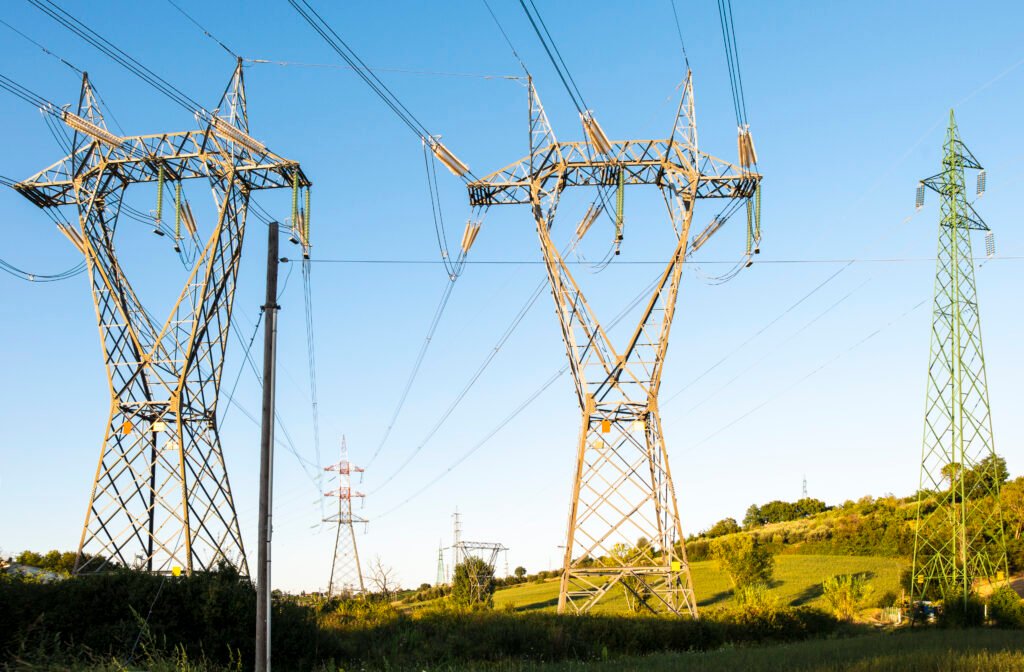
Transmission lines are the backbone of the power system. They move electricity from power plants and renewable energy facilities to cities, industries, and homes. Without sufficient transmission capacity, energy cannot reach the markets that need it.
This is why transmission permitting in the United States has become such a critical issue.
Building renewable energy facilities without expanding transmission is like building highways that lead nowhere. The energy exists, but it cannot be delivered efficiently.
The Transmission Approval Timeline Problem
One of the most striking realities of US energy infrastructure development is the timeline required to approve new transmission lines.
In many cases, obtaining approval for a new interstate transmission project takes seven to ten years.
This timeline includes:
- Environmental reviews
- State-level regulatory approvals
- Local land-use negotiations
- Federal oversight processes
- Legal challenges
While these procedures are designed to ensure responsible development, the result is a pace of infrastructure expansion that struggles to match the speed of energy demand growth.
In contrast, the demand for electricity driven by AI data centers, electrification of transportation, and economic growth is expanding much faster.
The mismatch between infrastructure development timelines and energy demand is creating what many analysts describe as a transmission bottleneck.
Interconnection Queues: The Hidden Grid Crisis
One of the clearest indicators of the transmission permitting problem is the explosion of interconnection queues.
Before a new power project can deliver electricity to the grid, it must receive permission to connect to the transmission system. This process evaluates whether the grid can safely handle additional generation.
Today, thousands of energy projects are waiting in these queues.
Many of them are renewable energy projects ready for construction but unable to move forward because the grid cannot accommodate them without additional transmission infrastructure.
This delay has significant consequences:
- Projects face rising financing costs
- Clean energy deployment slows
- Grid congestion increases
- Electricity prices can rise due to supply constraints
Transmission permitting in the United States is therefore not just a regulatory issue — it directly affects energy markets and consumer costs.
Local Opposition and the “Not in My Backyard” Effect
Another major challenge is local opposition to transmission infrastructure.
Transmission lines often cross multiple states, counties, and private properties. Communities sometimes oppose these projects due to concerns about:
- Land use
- Environmental impact
- Property values
- Visual disruption
While these concerns are legitimate and require careful consideration, they also contribute to project delays and legal disputes that can extend approval timelines significantly.
The result is a system in which even projects considered critical for national energy security can be slowed or halted by local objections.
Why Federal Reform Is Becoming Inevitable

Given the growing importance of transmission infrastructure, policymakers are increasingly debating whether federal reforms are necessary.
The Federal Energy Regulatory Commission (FERC) has already begun considering changes aimed at improving transmission planning and cost allocation.
Policy discussions include:
Centralized Approval Authority
Some experts argue that large interstate transmission projects should be treated as national infrastructure, similar to pipelines or highways. This could reduce the ability of individual local jurisdictions to veto projects of national significance.
Faster Environmental Reviews
Reforms could streamline federal review processes while maintaining environmental safeguards, reducing the time required to evaluate new infrastructure proposals.
Fair Cost Allocation
Another key debate involves how to distribute the costs of transmission projects.
States that produce renewable energy often require transmission to deliver electricity to high-demand urban regions. Determining who pays — the producing states, the consuming states, or all ratepayers — remains a central policy question.
The Economic Consequences of Transmission Delays
Transmission infrastructure does more than deliver electricity. It also shapes regional economic competitiveness.
Regions with robust transmission capacity can:
- Attract new industries
- Support data center expansion
- Integrate renewable energy efficiently
- Maintain more stable electricity prices
Regions with limited transmission capacity may experience:
- Grid congestion
- Higher electricity costs
- Reduced reliability
- Lost economic opportunities
This is why transmission permitting in the United States is increasingly viewed as an economic issue — not just an energy policy debate.
Grid Reliability and Extreme Weather
Transmission infrastructure is also critical for maintaining reliability during extreme weather events.
When heat waves, winter storms, or wildfires affect regional electricity supply, transmission networks allow operators to move power from unaffected areas to maintain stability.
Without sufficient transmission capacity, localized disruptions can quickly become large-scale outages.
Strengthening the transmission network is therefore one of the most effective ways to improve grid resilience.
The Clean Energy Transition Depends on Transmission
Renewable energy resources are often located far from population centers.
Wind power is strongest in the Great Plains. Solar energy is abundant in the Southwest. Hydropower resources exist in specific geographic regions.
Delivering this energy to major metropolitan areas requires large-scale transmission networks.
Without expanding transmission infrastructure, renewable energy deployment could stall even if generation technology continues to improve.
This is why many analysts now argue that the energy transition is not limited by technology — it is limited by infrastructure and permitting.
The Bottom Line
Transmission permitting in the United States has become one of the most critical issues facing the modern energy system. While the country has the technology and capital to build a more resilient, low-carbon grid, bureaucratic delays in approving new transmission lines threaten to slow progress.
If the permitting challenge is not addressed, the United States risks creating a fragmented power system that is expensive to maintain, vulnerable to outages, and unable to fully integrate new energy resources.
Solving the transmission permitting problem is therefore essential not only for clean energy goals, but also for grid reliability, economic competitiveness, and long-term energy security.
At US Energy Watch, we continue to monitor how transmission infrastructure, regulatory reform, and grid modernization intersect — because the future of the US energy system will depend on whether the country can build the wires needed to power its next generation.
Related Reading
- Aging US Power Grid: Why Transmission Expansion Cannot Wait
- How Energy Deals Are Reshaping the US Power Grid in 2026











3 Responses