

Green hydrogen for heavy industry is emerging as one of the most important technologies in the global push toward industrial decarbonization. While batteries dominate the transition in passenger vehicles and light transportation, many of the most energy-intensive sectors of the economy require a different solution.
Industries such as steel production, chemical manufacturing, shipping, and heavy transport demand extremely high energy density and continuous heat. In these sectors, electrification alone often cannot replace fossil fuels efficiently. That is why green hydrogen is increasingly viewed as a critical bridge technology — enabling deep emissions reductions without sacrificing industrial productivity.
In 2026, the United States is accelerating efforts to develop a hydrogen economy that supports both climate goals and industrial competitiveness.
Why Heavy Industry Needs Hydrogen
Heavy industry accounts for a significant share of global greenhouse gas emissions. Processes like steelmaking, ammonia production, and refining rely heavily on high-temperature heat and chemical reactions traditionally powered by coal, natural gas, or oil.
These processes require:
- Extremely high temperatures
- Continuous energy supply
- Large-scale energy density
- Reliable fuel sources
Batteries are excellent for energy storage and transportation, but they struggle to provide the sustained heat required for industrial processes.
This is where green hydrogen for heavy industry becomes crucial. Hydrogen can be used as both a fuel and a chemical feedstock, making it suitable for applications where electrification alone is insufficient.
From Grey Hydrogen to Green Hydrogen
Hydrogen is not new to industry. In fact, large quantities of hydrogen are already used in sectors such as refining and fertilizer production. However, most hydrogen today is produced from natural gas through a process known as steam methane reforming.
This form of hydrogen is commonly referred to as grey hydrogen, because the production process emits significant carbon dioxide.
Green hydrogen, by contrast, is produced through electrolysis, a process that splits water into hydrogen and oxygen using electricity generated from renewable energy sources such as wind and solar power.
When renewable electricity powers electrolysis, the hydrogen produced carries virtually no direct carbon emissions.
This shift from grey to green hydrogen is central to the decarbonization strategy of heavy industry.
The Rise of Hydrogen Hubs in the United States
One of the most significant developments in 2026 is the expansion of hydrogen hubs across the United States.
Hydrogen hubs are regional networks designed to connect hydrogen production, storage, transportation, and industrial use. These hubs allow multiple sectors to share infrastructure, reducing costs and accelerating deployment.
Federal policy support has been a major driver of this development. Government incentives and investment programs have encouraged companies to build large-scale hydrogen production facilities and develop the supporting infrastructure needed to distribute hydrogen to industrial users.
These hubs are expected to serve sectors including:
- Steel manufacturing
- Chemical production
- Heavy transportation
- Maritime shipping
- Power generation
By concentrating infrastructure and industrial demand in specific regions, hydrogen hubs help overcome one of the biggest barriers to hydrogen adoption — scale.
Falling Costs Are Improving Competitiveness
Historically, one of the main obstacles to green hydrogen adoption has been cost.
Producing hydrogen through electrolysis has traditionally been more expensive than producing grey hydrogen from natural gas. However, several trends are narrowing this gap:
- Rapid growth in renewable energy generation
- Falling costs of electrolyzer technology
- Federal tax incentives for clean hydrogen production
- Increased industrial demand
As renewable electricity becomes cheaper and electrolyzer manufacturing scales up, the cost of green hydrogen is becoming increasingly competitive.
Many analysts now expect green hydrogen to play a major role in decarbonizing sectors that cannot easily electrify.
Infrastructure Remains the Biggest Challenge
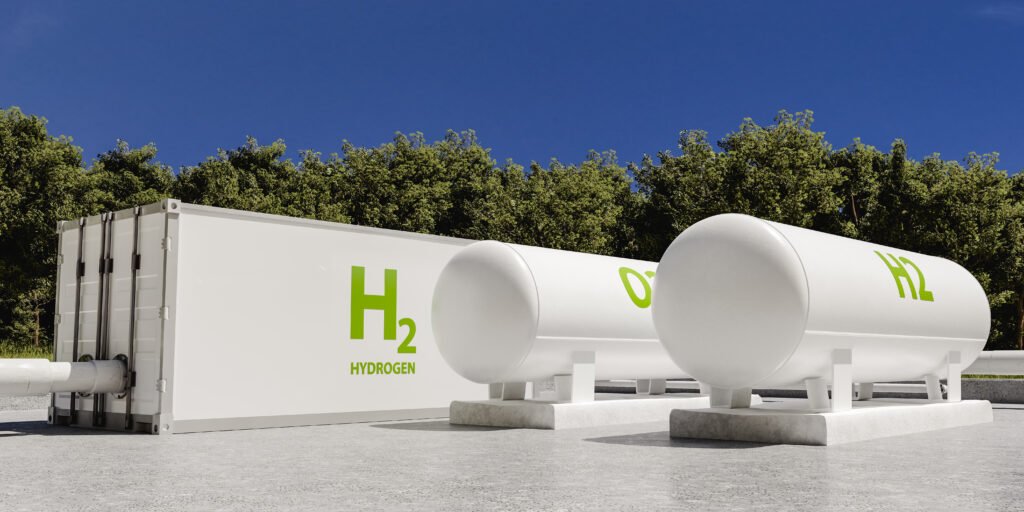
Despite the growing momentum, the hydrogen transition faces significant infrastructure challenges.
Hydrogen is the smallest molecule in the universe, which makes it difficult to store and transport compared to natural gas. It can escape through tiny gaps and can cause certain materials to become brittle over time.
This creates several logistical challenges:
- Specialized storage systems are required
- Dedicated pipelines may be needed
- Compression and liquefaction can be energy-intensive
- Transport infrastructure is still limited
As a result, building the hydrogen economy will require significant investment in infrastructure.
Adapting Existing Natural Gas Pipelines
One promising solution is adapting existing natural gas pipelines to transport hydrogen or hydrogen blends.
Pipeline operators are exploring ways to integrate hydrogen into existing infrastructure through:
- Hydrogen blending with natural gas
- Pipeline material upgrades
- New monitoring and safety technologies
While this approach presents technical challenges, it offers a potential pathway to accelerate hydrogen distribution without building entirely new networks from scratch.
The success of these infrastructure adaptations could play a decisive role in determining how quickly hydrogen adoption scales across industrial sectors.
Industrial Competitiveness and Global Competition
The hydrogen transition is not only about climate policy — it is also about maintaining industrial competitiveness.
Countries around the world are investing heavily in hydrogen technologies. Europe, Japan, South Korea, and Australia are all developing hydrogen strategies aimed at decarbonizing industry and securing future energy leadership.
For the United States, developing green hydrogen for heavy industry is critical to ensuring that American manufacturers remain competitive in a global economy that is increasingly focused on low-carbon production.
Companies that adopt hydrogen-based technologies may gain access to new export markets and meet emerging emissions standards.
Hydrogen and Energy Security
Hydrogen also plays a role in strengthening energy security.
Unlike fossil fuels that rely on global supply chains, hydrogen can be produced domestically using local renewable energy resources. This reduces dependence on imported fuels and enhances the resilience of industrial energy systems.
By integrating hydrogen production with renewable electricity generation, countries can create flexible energy systems that support both industrial growth and environmental sustainability.
The Bottom Line
Green hydrogen for heavy industry represents one of the most promising pathways toward deep decarbonization of sectors that are difficult to electrify. While batteries and renewable electricity dominate many parts of the energy transition, heavy industrial processes require solutions capable of delivering high energy density and sustained heat.
In 2026, hydrogen hubs, falling renewable energy costs, and new federal incentives are accelerating the development of a hydrogen economy in the United States.
Significant challenges remain — particularly around infrastructure and transportation — but the trajectory is clear. Hydrogen is no longer just a theoretical technology; it is becoming a central pillar of industrial energy strategy.
For the United States, the success of this transition will determine whether its heavy industries can remain globally competitive in a low-carbon world.
At US Energy Watch, we continue tracking developments in hydrogen technology, industrial energy systems, and infrastructure investment — because the future of American industry may depend on how quickly the hydrogen transition can scale.
Related Reading
- Transmission Permitting in the US: The Bottleneck Slowing the Energy Transition
- Aging US Power Grid: The Infrastructure Challenge for Clean Energy