Introduction
Grid resilience United States 2026 has become one of the most critical priorities for regulators, utilities, and policymakers as the country navigates a complex and rapidly evolving energy transition. Despite ambitious plans to accelerate the shift toward renewable energy, the early months of 2026 have delivered a more pragmatic reality: aging fossil fuel power plants are not disappearing — they are being kept online.
Across multiple regions, US regulators are issuing orders to maintain coal and natural gas facilities in standby or extended operation. The reason is straightforward but uncomfortable: reliability concerns are outweighing transition timelines.
As extreme weather events become more frequent and electricity demand continues to rise, the US power grid is being tested in ways it was not originally designed to handle. In this environment, grid resilience is no longer a theoretical goal — it is an operational necessity.
The Reliability Wake-Up Call
For years, US energy policy focused heavily on decarbonization targets, renewable deployment, and emissions reduction timelines. While these goals remain intact, 2026 has introduced a clear shift in priorities.
Grid operators are now asking a more immediate question:
Can the system stay online under stress?
Extreme heat waves, winter storms, and wildfire-related disruptions have repeatedly demonstrated that the grid’s greatest vulnerability is not long-term emissions — it is short-term reliability.
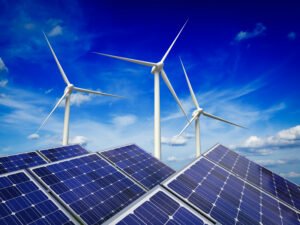
During peak stress conditions, renewable generation alone cannot always guarantee stable output. Solar depends on sunlight. Wind depends on weather patterns. Battery storage, while improving, is still limited in duration at scale.
This has forced a reassessment of how quickly traditional power sources can be retired.
Why “Old” Power Plants Are Staying Online
The decision to keep aging fossil fuel plants operational is not ideological — it is operational.
These facilities provide what the grid urgently needs:
- Dispatchable power (available on demand)
- Baseload stability
- Backup during peak demand
- Grid inertia and frequency control
In practical terms, they act as a safety net.
When demand spikes or renewable output drops unexpectedly, these plants can ramp up quickly and prevent system instability or blackouts.
In 2026, that safety net has become too important to remove.
Grid Resilience Means Physical Backup
One of the most important shifts in thinking around grid resilience United States 2026 is the renewed emphasis on physical backup capacity.
For years, the focus was on:
- Efficiency
- Decentralization
- Digital optimization
Today, the focus is shifting toward:
- Redundancy
- Reserve capacity
- System durability under stress
Grid resilience is no longer defined only by how efficiently electricity flows — but by how well the system performs under worst-case scenarios.
And in those scenarios, having available generation capacity matters more than theoretical efficiency.
Extreme Weather Is Driving Policy Decisions
Weather is now one of the most powerful drivers of energy policy.
Recent years have seen:
- Record-breaking heat waves
- Severe winter storms
- Droughts affecting hydropower
- Wildfire-related grid shutdowns
Each of these events places extraordinary stress on the grid.
In response, regulators are prioritizing resilience measures that ensure electricity remains available even under extreme conditions.
This includes:
- Delaying plant retirements
- Mandating backup capacity
- Increasing reserve margins
- Expanding emergency response planning
The message is clear: reliability comes first.
The Role of Natural Gas and Coal in 2026
While renewable energy continues to grow, natural gas and, in some regions, coal remain critical components of the energy mix.
Natural gas plants are particularly important because they:
- Ramp up quickly
- Provide flexible generation
- Support peak demand
Coal plants, although declining, still offer:
- Long-duration generation
- High reliability during extended demand periods
In 2026, these resources are increasingly viewed not as long-term solutions, but as bridging assets that support the transition.
Modernizing Instead of Retiring
Rather than shutting down older plants immediately, many utilities are investing in modernization.
This includes:
- Emissions reduction technologies
- Efficiency upgrades
- Carbon capture systems (CCS)
- Digital monitoring and optimization
The goal is to:
- Reduce environmental impact
- Extend operational life
- Maintain reliability
This approach reflects a more balanced transition strategy — one that acknowledges both climate goals and operational realities.
The Cost of Reliability
Maintaining backup capacity is not free.
Keeping aging plants online requires:
- Maintenance investment
- Fuel costs
- Staffing
- Regulatory oversight
These costs are often passed on to consumers through electricity rates.
This creates a tension between:
- Affordability
- Sustainability
- Reliability
In 2026, regulators are increasingly forced to balance these three priorities.
Grid Operators Are Changing Their Approach
Organizations responsible for grid management are adapting to new realities.
They are:
- Increasing reserve requirements
- Improving forecasting models
- Integrating weather risk into planning
- Enhancing coordination across regions
Grid planning is becoming more dynamic and risk-focused.
Instead of planning for average conditions, operators are now planning for extreme scenarios.
The Risk of Moving Too Fast
One of the key lessons of grid resilience United States 2026 is that energy transitions must be carefully managed.
Moving too quickly without adequate backup can lead to:
- Blackouts
- System instability
- Economic disruption
- Loss of public confidence
This has led to a more cautious approach.
The transition is still happening — but it is being adjusted to ensure that reliability is not compromised.
Nikolay Seizov’s Perspective: Stability Is the Real Benchmark
From an analytical standpoint, the events of 2026 highlight a fundamental truth about energy systems:
A grid is only as strong as its performance under stress.
In my analysis for US Energy Watch, I consistently emphasize that resilience is not about ideal conditions — it is about worst-case scenarios.
Renewable energy is essential for the future. But without sufficient backup capacity, even the most advanced energy system can fail under pressure.
What we are seeing in 2026 is not a reversal of the energy transition.
It is a correction.
A recognition that:
- Reliability cannot be compromised
- Infrastructure must evolve alongside demand
- Transition timelines must reflect physical realities
Keeping older plants online is not a failure of policy. It is a reflection of the system adapting to real-world constraints.
Long-Term Outlook: A Hybrid Energy System
Looking ahead, the US energy system is likely to become more hybrid.
It will include:
- Renewable energy
- Energy storage
- Nuclear power
- Flexible natural gas generation
- Advanced grid technologies
This combination will allow for:
- Lower emissions
- Higher reliability
- Greater resilience
The challenge is managing the transition between these systems without destabilizing the grid.
The Bottom Line
Grid resilience United States 2026 is redefining how energy policy is implemented. While the long-term goal of decarbonization remains unchanged, the immediate priority is ensuring that the grid can withstand extreme conditions and rising demand.
Aging power plants are staying online not because the transition has failed — but because reliability cannot be compromised.
In 2026, the energy transition is no longer just about building the future. It is about maintaining the present while getting there.
At US Energy Watch, we continue to analyze how grid resilience, infrastructure investment, and energy policy intersect — because the future of electricity depends on getting this balance right.
Source
Source: Analysis based on data from the U.S. Energy Information Administration (EIA), Federal Energy Regulatory Commission (FERC), and grid reliability assessments.