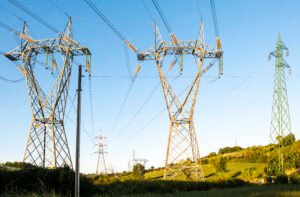
Grid cybersecurity in the United States has become one of the most critical issues facing the modern energy system. In 2026, the power grid is no longer just a network of wires, transformers, and substations — it is a vast digital ecosystem powered by software, sensors, automation, and real-time communication systems.
This digital transformation has brought enormous efficiency gains. Smart grid technologies, remote monitoring, and automated control systems allow utilities to balance supply and demand in real time, integrate renewable energy, and manage increasingly complex electricity flows.
But digitization also brings risk.
Every new sensor, communication protocol, or cloud-connected control system expands what cybersecurity experts call the “attack surface.” As the grid becomes smarter, it also becomes more exposed to cyber threats from criminal organizations, state-sponsored actors, and sophisticated ransomware groups.
In 2026, protecting the digital infrastructure of the power grid is no longer just an IT issue — it is a matter of national security.
Why Cybersecurity Has Become Central to Grid Operations
Modern power grids rely heavily on industrial control systems (ICS) and SCADA networks (Supervisory Control and Data Acquisition) that monitor and manage electricity flows across thousands of facilities.
These systems control:
- Power plants
- Transmission lines
- Substations
- Grid frequency and voltage
- Load balancing operations
As these systems have become more interconnected with traditional IT networks, their exposure to cyber threats has increased significantly.
Cyber incidents targeting the energy sector are rising rapidly. The energy and utilities industry is now considered one of the most frequently targeted critical infrastructure sectors worldwide.
Cyberattacks can potentially disrupt electricity supply, damage critical equipment, and threaten public safety if defensive systems fail.
The Rise of Ransomware and State-Backed Cyber Threats
One of the most common cyber threats facing utilities today is ransomware.
Ransomware attacks involve malicious software that locks or encrypts critical systems until a payment is made to the attackers. The energy sector has become an attractive target because disruptions to electricity or fuel supply can cause widespread economic and social consequences.
In recent years, ransomware attacks targeting the energy and utilities sector have surged dramatically. Some reports indicate increases of up to 80% in attacks year-over-year.
Nation-state actors are also increasingly active. These attackers often seek long-term access to infrastructure networks for intelligence gathering or potential disruption during geopolitical conflicts.
A well-known example occurred in 2021 when a ransomware attack forced the shutdown of the Colonial Pipeline, a critical fuel supply system serving the eastern United States.
The incident demonstrated how cyberattacks on energy infrastructure can quickly trigger real-world economic disruptions.
SCADA Systems: The Most Sensitive Target
At the heart of grid cybersecurity concerns are SCADA and operational technology (OT) systems.
Unlike traditional IT networks, which primarily handle data, OT systems control physical infrastructure. If compromised, attackers could potentially manipulate power flows, shut down substations, or damage equipment.
Modern cyber threats targeting industrial control systems include:
- Malware designed specifically for OT environments
- Remote access exploitation
- Supply-chain attacks
- Phishing campaigns targeting utility employees
- Network intrusion through poorly secured devices
The convergence of IT and OT systems — while beneficial for operational efficiency — has created new vulnerabilities that utilities must manage carefully.
Digital Resilience: The New Defense Strategy
Because cyber threats cannot be eliminated entirely, utilities are increasingly focusing on digital resilience.
Digital resilience means designing grid systems that can continue operating even when part of the network is compromised.
This includes:
- Network segmentation to isolate affected systems
- Automated threat detection
- Real-time anomaly monitoring
- Rapid incident response capabilities
- Backup operational systems
In practical terms, digital resilience allows utilities to isolate compromised network segments automatically without shutting down entire regions of the grid.
This approach is becoming a core principle of modern grid cybersecurity.
Federal Standards and Regulation
Recognizing the growing cyber threat landscape, US regulators have strengthened cybersecurity standards for utilities.
Organizations such as:
- FERC (Federal Energy Regulatory Commission)
- NERC (North American Electric Reliability Corporation)
- Department of Energy (DOE)
have introduced updated cybersecurity frameworks and reporting requirements.
Recent standards require utilities to improve protections around communication networks, access control, and supply-chain security for critical infrastructure.
These policies aim to ensure that cybersecurity practices evolve alongside the increasing digitalization of the energy system.
The Weakest Link: Smaller Utilities
One of the biggest vulnerabilities in grid cybersecurity is not large national utilities — it is smaller municipal operators.
Local utilities often operate with limited cybersecurity budgets and outdated infrastructure, making them more vulnerable to attack.
Federal programs are increasingly providing funding and technical assistance to help smaller utilities modernize their control systems and strengthen cyber defenses.
Public-private cooperation has become essential for improving national grid resilience.
Cybersecurity as a National Security Issue
The electric grid is often described as the backbone of modern society.
Electricity powers:
- hospitals
- telecommunications
- transportation systems
- financial networks
- water infrastructure
- national defense systems
A successful cyberattack on the grid could trigger cascading disruptions across multiple sectors simultaneously.
This is why cybersecurity experts increasingly view grid protection as a national security priority rather than just a technical challenge.
Nikolay Seizov’s Perspective: The Grid as a Digital Battlefield
In his analysis for US Energy Watch, energy analyst Nikolay Seizov argues that the transformation of the power grid into a digital system has fundamentally changed how infrastructure must be protected.
According to Seizov, the most important security barrier in modern power systems is no longer the physical fence around a substation.
It is the encryption of the data that controls it.
“Electric utilities once focused primarily on protecting physical infrastructure,” Seizov writes. “But in the digital era, the grid is increasingly defined by its software layer. Protecting that digital backbone is now essential to maintaining national energy security.”
Seizov emphasizes that cybersecurity must be treated as a permanent operational investment, not a one-time upgrade.
In his view, grid security is ultimately about resilience — the ability of the system to absorb attacks without collapsing.
The Future of Grid Cybersecurity
Looking ahead, cybersecurity will only grow more important as the grid becomes more digital.
Emerging technologies such as:
- AI-driven grid management
- smart meters
- distributed energy resources
- EV charging networks
- grid-scale batteries
will further expand the digital complexity of the energy system.
Each new technology introduces new entry points that must be protected.
The challenge for utilities will be balancing innovation with security.
The Bottom Line
Grid cybersecurity in the United States has become one of the defining infrastructure challenges of the digital age. As the electric grid evolves into a software-driven system, the threats facing it are becoming more complex and sophisticated.
Protecting the grid now requires more than physical defenses. It requires resilient digital systems capable of detecting, isolating, and responding to cyber threats in real time.
In 2026, the most important line of defense for America’s energy system may not be the walls surrounding its substations — but the encryption protecting its data.
At US Energy Watch, we continue to analyze the intersection of cybersecurity, energy infrastructure, and national resilience — because in a digital energy economy, protecting the grid means protecting the backbone of modern society.
Sources
- U.S. Department of Energy – Cybersecurity Energy Security and Emergency Response (CESER)
- North American Electric Reliability Corporation (NERC) cybersecurity standards
- Pacific Northwest National Laboratory – Grid cybersecurity research
- Cyfirma and Trustwave cybersecurity reports on energy sector threats
- Colonial Pipeline ransomware incident analysis