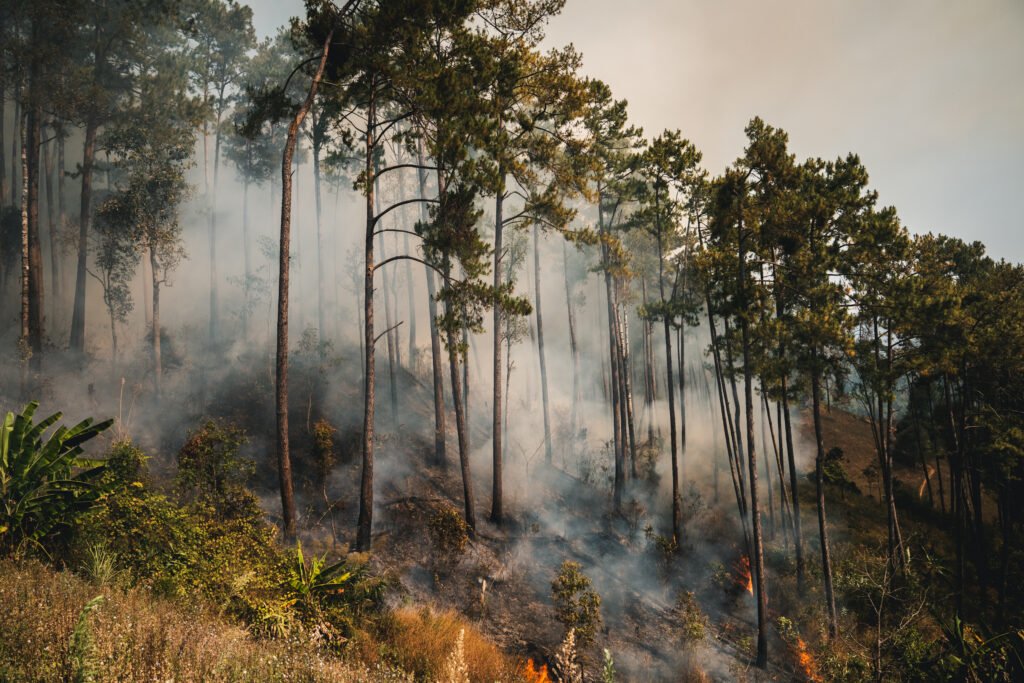
Grid resilience in extreme weather is no longer a forward-looking concept in 2026—it’s the operating environment. Wildfires are no longer an isolated seasonal problem limited to a few Western states. They have become a systemic risk to U.S. energy security, forcing utilities, regulators, insurers, and communities to redefine what “reliability” actually means.
From my vantage point as an analyst, the most important shift is not only technical—it’s philosophical. The grid used to be evaluated primarily on continuity of service: keep the power on, restore it quickly, and minimize outages. In today’s climate reality, reliability must also account for public safety. That creates a painful balancing act: how do we reduce ignition risk and protect communities without normalizing prolonged power shutoffs as the default strategy?
In 2026, the answer is not simple. But the direction is clear: the United States is moving toward a grid designed to operate under persistent climate stress—where extreme heat, high winds, smoke conditions, and wildfire exposure are treated as recurring constraints, not exceptional events.
The grid under climate siege
The relationship between wildfire and power infrastructure is both destructive and two-way.
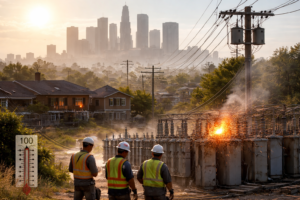
On one side, aging equipment, vegetation contact, and high-wind conditions can create ignition risk. Overhead conductors can clash, lines can fall, and equipment can fail precisely when weather conditions make any spark dangerous. On the other side, wildfires themselves damage the grid: transmission corridors, distribution feeders, substations, and communications systems can be destroyed or rendered inaccessible. Restoration is rarely a matter of hours—it can take days or weeks, especially when crews cannot safely enter a burned area or when access roads are blocked.
This is why “reliability” in 2026 isn’t just about outage frequency. It’s about risk exposure. When a utility operates in a high fire-threat region, the consequences of failure are no longer limited to customer dissatisfaction or penalties. They can include catastrophic liability, enormous financial losses, and long-term trust damage.
That reality has changed operational protocols. It has also changed investment priorities. Utilities that once allocated capital mainly toward capacity growth and routine replacement are now pouring billions into mitigation: strengthening equipment, improving situational awareness, and reducing ignition probability under extreme weather conditions.
PSPS: preventive shutoffs as a mainstream tool
Public Safety Power Shutoffs (PSPS) have shifted from extraordinary emergency measures to a standard part of risk management in certain U.S. regions. The logic is straightforward: if weather and fire conditions create a high probability that energized lines could ignite a wildfire, shutting off power can reduce risk.
But there is nothing “simple” about the consequences.
Even when PSPS events are more selective in 2026—helped by better forecasting, localized switching, and improved grid visibility—the social and economic cost remains significant:
For business operations
Power loss means lost revenue, spoiled inventory, interrupted manufacturing, and disrupted supply chains. For many sectors—food, cold storage, healthcare services, and logistics—an outage is not an inconvenience. It is a direct economic hit.
For local economies and investment decisions
In high fire-threat regions, power reliability is now a factor in site selection and insurance pricing. Communities that face frequent shutoffs can become less attractive for expansion. Even when the workforce and infrastructure are strong, operational risk can override those advantages.
For vulnerable populations
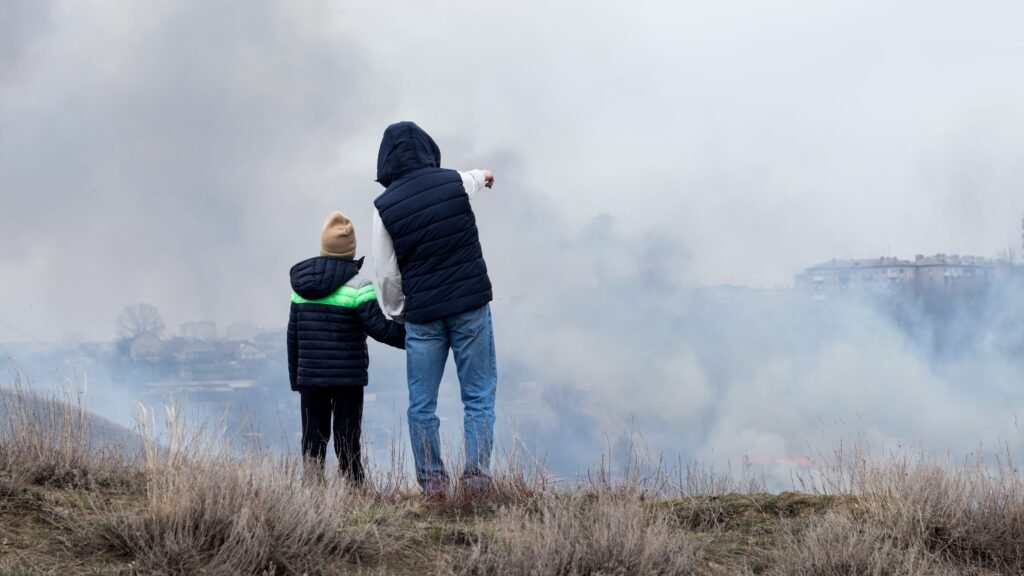
The most overlooked cost is human vulnerability. Many residents rely on electric medical devices, refrigeration for medication, or mobility support. Even “short” outages can become critical when the surrounding environment is already stressed by smoke, heat, or evacuation conditions.
This is the core tension of 2026: PSPS can reduce ignition risk, but it cannot become the long-term substitute for resilience. A grid that stays safe by turning off power is not a resilient grid. It is a grid managing risk by withdrawing service.
The resilience investment playbook: what utilities are building now
From my analysis, utilities are concentrating mitigation spending into three major directions. The specifics vary by region, but the strategic themes are remarkably consistent.
1) Undergrounding: effective, targeted, expensive
Undergrounding—placing power lines below ground—remains one of the most effective ways to reduce wildfire ignition risk from distribution infrastructure. It also improves storm resilience in many cases.
But the economics are harsh. Undergrounding is capital-intensive, slow to deploy at scale, and not always feasible in mountainous terrain or dense urban environments. In 2026, the dominant approach is targeted undergrounding: focus on the highest-risk corridors, critical community routes, and locations with repeated outage history.
Undergrounding is not a magic solution. It reduces ignition risk, but it can introduce different operational challenges (fault location, repair complexity). Still, in the highest-risk zones, it remains one of the strongest mitigation options available.
2) Grid hardening: stronger poles, safer conductors, faster protection
Grid hardening is the broad category of upgrades designed to make overhead infrastructure safer and more resilient under extreme conditions. That can include:
- composite or fire-resistant poles and crossarms
- covered or insulated conductors in high-risk zones
- improved relays and sectionalizing devices
- advanced fault detection that trips faster when abnormal conditions appear
- substation upgrades to withstand heat, smoke exposure, and wind events
The operational goal is to reduce the probability that a line fault becomes an ignition event—and to reduce the geographic scope of outages when faults occur.
In 2026, hardening also means building a grid that can be operated in smaller “segments.” The more a utility can isolate a problem area, the less likely it is that entire communities lose power due to risk conditions in a specific corridor.
3) Digital vegetation management: drones, satellites, and predictive maintenance
Vegetation management is no longer a “maintenance” function. It is a frontline safety program.
Utilities are increasingly using drones, satellite monitoring, LiDAR mapping, and predictive analytics to identify risk zones along rights-of-way. The goal is to reduce vegetation contact risk and prioritize mitigation work based on probability and consequence, not just calendar schedules.
In practical terms, this is a shift from reactive trimming to risk-based management—supported by monitoring that can prove compliance and document conditions for regulators and insurers.
Microgrids: a lifeline when the main grid must go dark
One of the most promising resilience tools I’m tracking is the rise of microgrids, particularly those designed around solar + battery storage.
A microgrid can keep critical loads operating when the main grid is shut off, damaged, or intentionally de-energized for safety. In the wildfire context, microgrids are especially valuable for:
- hospitals and clinics
- emergency shelters and community centers
- water pumping and treatment facilities
- telecom towers and emergency communications
- cooling centers during heat events
- critical municipal infrastructure
The resilience advantage is straightforward: even if the broader network is forced into a PSPS shutdown, a properly designed microgrid can maintain essential services.
In 2026, the microgrid conversation is expanding from “pilot projects” to a strategic layer in regional resilience planning. The key challenge is scaling: regulatory rules, interconnection standards, and financing models often lag behind the technical readiness.
But in high fire-threat regions, microgrids may become the most practical bridge between today’s risk reality and tomorrow’s fully hardened infrastructure. They do not replace the grid. They reduce the consequences when the grid must be de-energized.
A new definition of reliability: safety, continuity, and transparency
The biggest operational shift I see in 2026 is how “reliability” is measured and communicated.
Historically, reliability metrics were built around outage frequency and duration. Those metrics still matter, but they don’t capture the full story in an era of PSPS and wildfire risk. A utility can reduce ignition probability by de-energizing lines, yet customer outage numbers rise. From a purely continuity-based perspective, that looks like failure. From a public safety perspective, it may be a rational choice.
This is why regulators, utilities, and communities increasingly need a reliability framework that includes:
- risk reduction outcomes (ignition probability, exposure mitigation)
- selectivity and precision (smaller, more targeted shutoffs)
- restoration speed and safe access planning
- community readiness (backup power for critical customers)
- transparent communication so customers can plan and protect themselves
In other words, reliability becomes a multi-objective target: keep power on, keep communities safe, and be honest about tradeoffs.
The near-term reality: outages may increase before they improve
Here is the hard truth that many stakeholders avoid saying out loud: in the short term, outages may increase in high-risk regions even as the grid becomes safer.
Why? Because mitigation and hardening take time. Undergrounding is slow. Supply chains for specialized equipment can be constrained. Permitting and construction timelines are long. Meanwhile, the climate-driven risk environment is already here.
In this transitional period, utilities will rely on a combination of:
- more selective PSPS
- better forecasting and operational segmentation
- accelerated hardening and targeted undergrounding
- expansion of microgrids and backup solutions for critical services
This is not ideal, but it is a realistic pathway from today’s risk environment toward a more resilient architecture.
My conclusion: a grid designed for fire risk
In 2026, we are building the future on the foundation of climate adaptation. Power shutoffs may be unavoidable in the near term, but they are not a sustainable end-state. A resilient system cannot be defined by how effectively it turns itself off. It must be defined by how well it continues to serve communities safely under extreme conditions.
That is why grid resilience in extreme weather will define not only economic performance, but life safety across large parts of the United States. The future belongs to energy systems that are decentralized where appropriate, flexible by design, and protected by technology—systems that can segment, island, and recover faster, while reducing ignition risk and limiting damage.
At US Energy Watch, we will continue to follow this operational climate reality closely, because the grid’s resilience will determine which regions thrive—and which remain trapped in a cycle of risk, outages, and escalating costs.