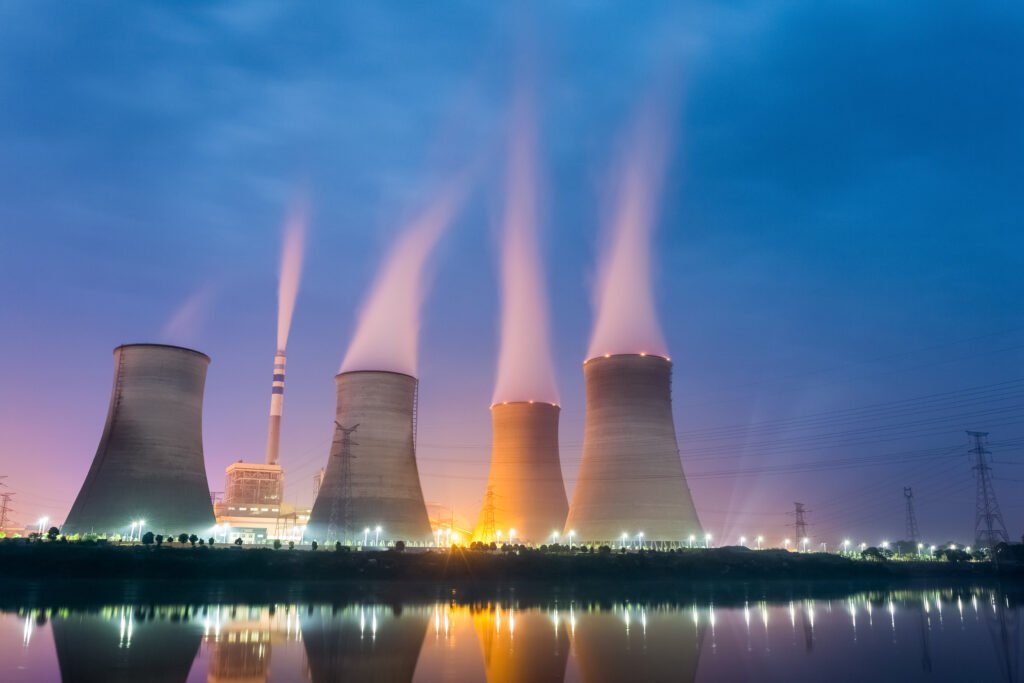
Nuclear energy for AI data centers is rapidly emerging as one of the most important strategic energy discussions in the United States in 2026. As artificial intelligence infrastructure expands at unprecedented speed, the question is no longer whether the grid can grow — it is whether it can provide reliable, around-the-clock baseload power to sustain the AI economy.
For more than a decade, the US energy debate centered largely on renewable energy expansion. Solar and wind scaled quickly, costs fell, and decarbonization became the dominant policy narrative. But AI has changed the equation.
AI does not sleep. Data centers do not operate only when the sun shines or the wind blows. The AI economy requires continuous, high-density electricity — and that requirement is reshaping how policymakers, utilities, and corporate leaders think about nuclear power.
Why AI Data Centers Require Baseload Power
AI-driven data centers differ fundamentally from traditional computing facilities. Large-scale AI training clusters require:
- Constant, uninterrupted electricity supply
- Extremely high reliability (downtime is unacceptable)
- Massive cooling loads
- Predictable long-term pricing
Unlike residential demand, which fluctuates with weather and time of day, AI loads are continuous and intensive. A single hyperscale AI facility can consume as much electricity as a mid-sized city.
This is where nuclear energy for AI data centers becomes central to the discussion.
Nuclear power plants provide what energy planners call baseload power — steady, 24/7 electricity output independent of weather conditions. For AI infrastructure, that reliability is not a luxury. It is a necessity.
The Return of Nuclear in the US Energy Mix
After years of stagnation and plant retirements, nuclear energy is experiencing a strategic reevaluation.
Several factors are driving this shift:
- Rapid electricity demand growth from AI and electrification
- The need for firm, carbon-free power
- Grid reliability concerns during extreme weather
- Corporate interest in long-term stable energy contracts
According to data from the U.S. Energy Information Administration (EIA), nuclear energy continues to provide a significant share of US carbon-free electricity. While renewable generation has grown, nuclear remains the largest source of non-emitting firm power in many regions.
For companies building AI infrastructure, this matters.
Big Tech Is Moving Beyond Power Purchases
In 2026, technology companies are no longer simply purchasing renewable energy credits or signing solar PPAs. Instead, they are actively exploring:
- Extending the life of existing nuclear plants
- Supporting uprates at operating reactors
- Investing in Small Modular Reactors (SMRs)
- Partnering directly with utilities for dedicated baseload supply
Nuclear energy for AI data centers is not framed as a climate gesture. It is increasingly viewed as a survival strategy for AI infrastructure.
Without firm generation capacity, data center expansion risks hitting physical grid constraints.
Small Modular Reactors (SMRs): A Strategic Bet
Small Modular Reactors have moved from theoretical designs to serious commercial discussion.
SMRs offer several advantages:
- Smaller upfront capital requirements
- Shorter construction timelines (in theory)
- Scalable deployment
- Enhanced safety features
For AI operators, SMRs present the possibility of co-located nuclear generation, reducing reliance on congested transmission systems.
While still in early stages, SMRs represent one of the most closely watched developments in nuclear energy for AI data centers.
The Economic Reality: High Capital, Long Horizons
Despite renewed interest, nuclear energy remains capital-intensive.
Challenges include:
High Upfront Costs
Traditional nuclear plants require billions of dollars in capital investment. Even SMRs require substantial financing and long-term commitments.
Regulatory Timelines
Licensing and approval processes remain complex and time-consuming. Demand for AI infrastructure grows in months; nuclear permitting can take years.
Waste Management
Long-term storage and federal policy clarity remain unresolved issues that influence public perception and investment risk.
These constraints mean nuclear expansion will not happen overnight. However, the direction of policy and private capital suggests momentum is building.
Why Renewables Alone May Not Be Enough
Solar and wind are critical components of decarbonization. However, they are inherently variable.
AI data centers cannot pause workloads when cloud cover increases or wind output drops. While battery storage is improving, large-scale, multi-day storage remains expensive and limited.
This is why nuclear energy for AI data centers is increasingly discussed alongside renewables — not as a replacement, but as a stabilizing anchor.
A grid built around variable renewables still requires firm generation to maintain reliability.
Policy Momentum Is Shifting
Federal and state policymakers are reconsidering nuclear’s role in the energy mix.
Recent policy discussions have focused on:
- Incentives for plant life extensions
- Support for advanced reactor development
- Streamlining licensing pathways
- Integrating nuclear into clean energy standards
Think tanks and energy analysts increasingly describe nuclear power as essential to balancing decarbonization with reliability — especially as AI demand accelerates.
The Strategic Implication for the US Economy
The implications go beyond electricity markets.
If the United States wants to maintain leadership in artificial intelligence, it must ensure adequate, reliable energy supply.
Nuclear energy for AI data centers touches on:
- National competitiveness
- Energy security
- Grid resilience
- Long-term cost stability
Regions able to secure firm, carbon-free power will attract investment. Those constrained by grid instability may lose economic opportunities.
The Cost Allocation Question
A critical policy debate remains: who pays for nuclear expansion?
If nuclear plants are built primarily to serve large data centers, regulators must determine how infrastructure costs are allocated.
Should:
- AI companies bear dedicated infrastructure costs?
- Costs be socialized across ratepayers?
- Hybrid financing models be developed?
These debates will shape how quickly nuclear capacity can scale.
The Bottom Line
Nuclear energy for AI data centers is no longer a theoretical discussion. In 2026, it is a central pillar of the energy conversation.
AI requires constant, high-density, reliable power. Nuclear provides carbon-free baseload electricity that renewables alone cannot consistently guarantee at scale.
Challenges remain — capital intensity, regulatory hurdles, waste management — but momentum is clearly shifting. Without nuclear energy, the vision of a decarbonized and hyper-powerful digital economy becomes far more difficult to achieve.
At US Energy Watch, we continue to monitor how nuclear energy, AI infrastructure, and grid policy intersect — because the future of America’s digital economy depends on getting the energy equation right.
Source
Source: Analysis informed by publicly available data from the U.S. Energy Information Administration (EIA), Department of Energy reports, and industry assessments of AI-driven electricity demand.